SmoltIQ measures each tank's quality with the Smolt Quality Score and supports the full cycle: transfer decision and planning, receipt and follow-up at sea, the buyer's certificate and batch traceability.
Sea transfer is the most expensive decision of the freshwater cycle. SmoltIQ replaces paper sheets, local Excel files and email consolidation with a single flow, with the same criteria across all your hatcheries.
Each stage feeds the next: what is measured in freshwater backs the decision, and what happens at sea comes back to improve the next lot.
Everything goes into the batch traceability, from egg to harvest, and exports to PDF for audits.
Each variable gets a level from 0 to 3 and contributes according to its weight. A lower index is better. Ranges and weights are data your team manages, not code.
If data is missing, the index is still calculated and states its coverage: an incomplete number is never presented as final.
Each group's page shows the index and what explains it, the smoltification window, the cost of each option and who must approve. Nothing is decided on a separate spreadsheet.
Large buttons for working with gloves, one-tap "No findings" and instantly colored K factor.
Boundary rules, CV with sample deviation and each variable's contribution in view. The criteria are versioned.
A photo of each fish with a suggested visual level; the operator always confirms.
Agreement between assessors and ongoing review of visual scores without seeing the original score.
Control chart of SQS, CV and weight with Western Electric rules per hatchery.
ATPase is added when it arrives, and the system warns whether the sample is enough for the set weight error.
Stockings, transfers, mortality and counts by tank and batch; the sampling total fills in automatically.
Water changes, splits, grading, fasting and vaccines recorded in seconds.
Scheduled treatments and vaccines with their withdrawal period, checked against the transfer date.
Sensors via API or CSV, anomalies against the tank's normal and a warning if a value stays out of range.
Cost per smolt and per day from the inventory, to know what waiting costs.
Tank labels to open recording, and reading of sample codes or PIT tags.
Estimated from ATPase and degree-days, together with the thermal growth projection.
Transfer today, wait or treat: the expected loss and cost of each option.
Assigns groups by urgency to a vessel with capacity and records each trip with its checklist.
Which profiles sign off by classification; without approval, there is no trip.
Model trained on your company's transferred groups, with its confidence range.
What lowered the index in similar groups of your company; with AI, the drafted plan as well.
PDF with QR, simple electronic signature and SHA-256 fingerprint that anyone can check.
Groups, documents, quality commitments and weekly sea mortality in one place.
The receiving site records arrival, initial mortality and fish condition.
Publish verified groups and receive reservation requests.
Conversation, files and resolution, linked to the lot traceability.
Egg suppliers and diets compared by quality, sea mortality and harvest.
Field mode stores fish and photos on the device and syncs automatically when the signal returns.
CSV, API, Power BI and scheduled connectors to your production system.
Scheduled email reports, email alerts, notifications and webhook.
Two-factor authentication, access by hatchery, full audit trail and compliance with Law 21.719.
Interface, reports and certificates in Spanish, English and Norwegian.
Help center with search and a one-minute tour on first login.
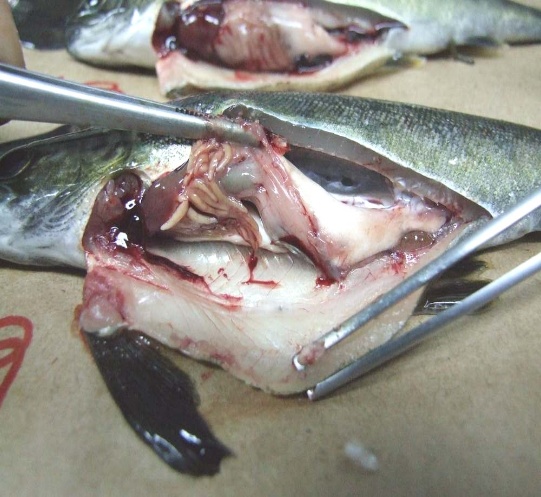
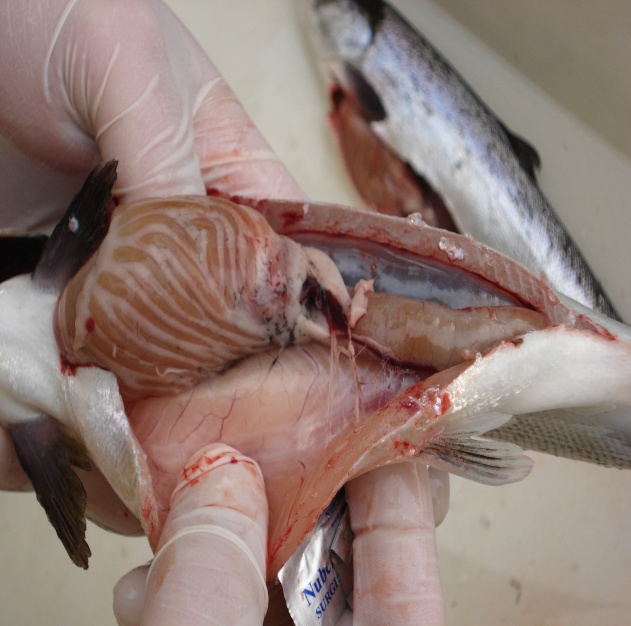
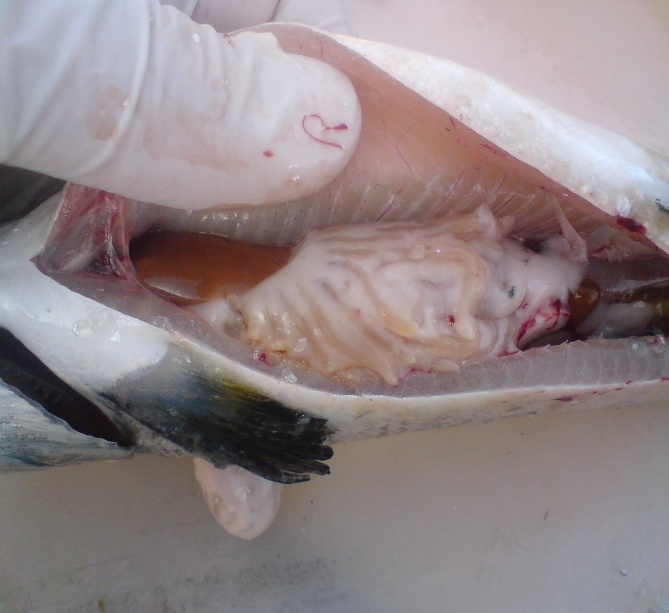
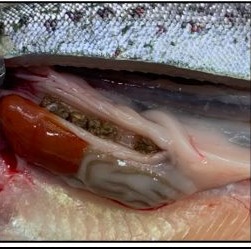
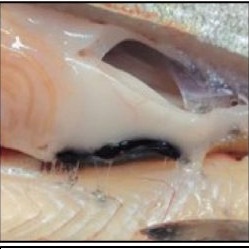
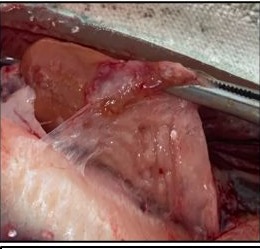
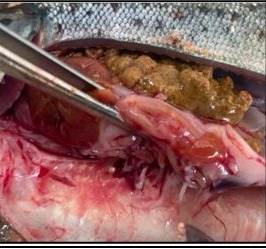
Visceral fat, melanosis and adhesion are recorded by tapping the reference image that matches the fish. All operators assess with the same reference, at every hatchery.


Each profile sees its own view, with permissions by hatchery. Buyers and sea sites use their own portal, with no access to the rest.
They record quickly, without paper or signal. If something was wrong, they fix it from the table and it is logged.
They keep inventory, log and health plan, and see what is missing before each transfer.
Verifies results, manages the criteria, audits assessors and issues certificates.
Decides and approves transfers with costs, risks and criteria comparable across hatcheries.
They see their certified groups, report sea mortality and open complaints with evidence.
They record each group's receipt: fish received, initial mortality and condition.
No double entry: production, health, water and lab data come in automatically, and results flow out to your reports.
Scheduled connectors read the export URL or API of your production system (Fishtalk, Mercatus, AquaCloud or other) with the field mapping you define.
Create your account and explore the product with sample data right away. When the trial ends, choose a plan; your data is kept.
An index from 0 to 100 % that summarises 16 variables from the manual (weight, condition factor, CV, visual variables, dissection, ATPase and tank data). Lower is better: Fit up to 25 %, Conditional between 25 and 70 %, Unfit from 70 %. Ranges and weights are tailored to each company and every change is versioned.
Yes. Field mode stores samplings, fish and photos on the tablet or phone and syncs them automatically when the connection returns, without duplicating records. Before entering the room, just open the app once with signal to download the work package.
An up-to-date browser on a tablet, phone or computer. Nothing to install, although it can be added to the home screen. With Chrome or Edge you can connect a Bluetooth or USB scale and a measuring board, and dictate by voice.
The free trial is ready in seconds, with sample data. To run with real data, hatcheries, tanks and reference lists are loaded (also by CSV) and users are created: it usually takes a day.
Yes. Each company sees only its own data, with roles and per-hatchery access, two-step verification, an audit log and encrypted connections. We comply with Chilean Law 19.628 as amended by Law 21.719: you can review the privacy policy and exercise your rights at any time.
Only in optional features (result interpretation, level suggestion from photos and the assistant). Only the necessary production data is sent, never user names or emails, and the company can turn them off. Decisions are always made by your technical team.
Yes. There is CSV import and an API to bring in production, treatments, water sensors and lab results, and to send results to Power BI. The smolt buyer can report sea mortality from their portal or via the API.
For the whole cycle. Besides sampling and the SQS, it includes inventory, log and health plan, the smoltification window, economic scenarios, the wellboat plan, receipt at the sea site, follow-up to harvest, certificates, complaints and batch traceability from egg to harvest.
Yes, each with its own portal and no access to the rest of the information. The buyer sees its certified groups, downloads documents, reports sea mortality and opens complaints. The sea site records the receipt of each group.
SmoltIQ works in the phone and tablet browser, and can be added to the home screen to use it like an app, also offline.
The account becomes read-only: you can view and export, but not record changes until you choose a plan. Your data is kept.
Yes. Reports, the compliance report, CSV files and the API let you take everything with you. When the contract ends, the data is returned or deleted, as you choose.
Spanish, English and Norwegian: the interface, PDF reports and certificates.
We show you the platform through a full cycle, from sampling to sea, and review how it fits your hatcheries, tanks and assessment criteria.